
























Shopify Plus Preferred Partner

Shopify ERP Integration That Eliminates the Manual Work Holding Your Business Back

Connecting ERPs to Shopify

Your ERP manages your financials, inventory, and operations. Your Shopify store manages your sales. When those two systems are not connected, your team manually moves data between them every single day. That is time wasted, errors introduced, and decisions made on information that is already out of date.

Whether you need a NetSuite Shopify connector, a custom API build, or middleware configuration for a less common ERP, we have built it before.

Trusted by Leading Shopify Brands

Why Connecting Your ERP to Shopify Changes Everything

When Shopify and your ERP run as separate systems, your team becomes the integration. They export files, copy data, reconcile spreadsheets, and fix the errors that come from doing this manually every day. Here is what that actually costs.

Gamify Your Cart

Fully Custom Product Templates

Site Speed & Performance Gains

ERP Integration & Automation

Increased Efficiency That You Can Actually Measure

Every manual data entry between your ERP and Shopify is a chance for something to break. Wrong stock count, duplicate order, mismatched customer record. It adds up fast. The best ERP for Shopify integration eliminates that entire layer of human error by automating the flow of sales orders, customer data, and shipping details between both systems. Your operations team stops babysitting spreadsheets and starts doing work that actually moves revenue. That is what a proper ERP for Shopify connection delivers from day one.

Inventory Visibility Across Every Warehouse, Every Channel

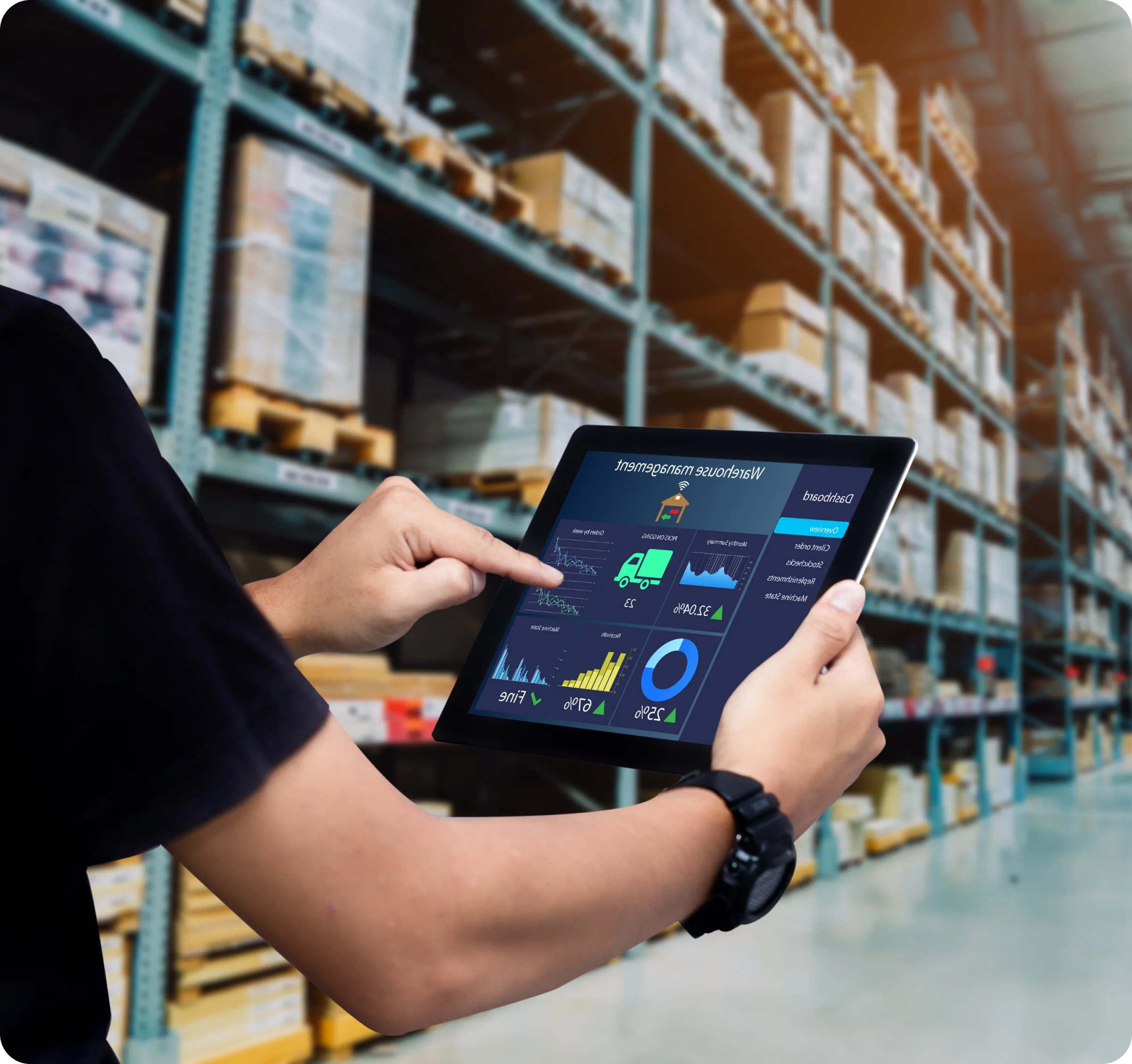
Overselling kills trust. Stockouts kill revenue. Both happen when your ERP and Shopify are not sharing inventory data in real time. Our ERP for Shopify integrations give you a single unified view of every SKU across every warehouse and every sales channel, so your available quantities are always accurate. No more selling a product on Shopify that your ERP already allocated to a wholesale order an hour ago. As one of the top Shopify ERP CRM integration firms, we build connections that keep your stock levels, reorder triggers, and fulfillment routing running on autopilot.

We do Real Time Data Sync, Not "Close Enough" !

A price change in your ERP should show up in your Shopify store instantly, not after someone remembers to export a CSV tomorrow morning. With our integration architecture, every update to stock levels, pricing, order status, and customer records syncs bidirectionally the moment it happens. No batch jobs running overnight. No five hour lag that causes your support team to apologize for showing the wrong price. When brands look for the best ERP for Shopify sync, this is the standard Ecomm Wizards sets, and it is the reason Shopify ERP CRM integration firms trust us to build the infrastructure their clients depend on.

What We Sync Between Your ERP and Shopify

Every data flow is configured to move the right information, in the right direction, at the right time.
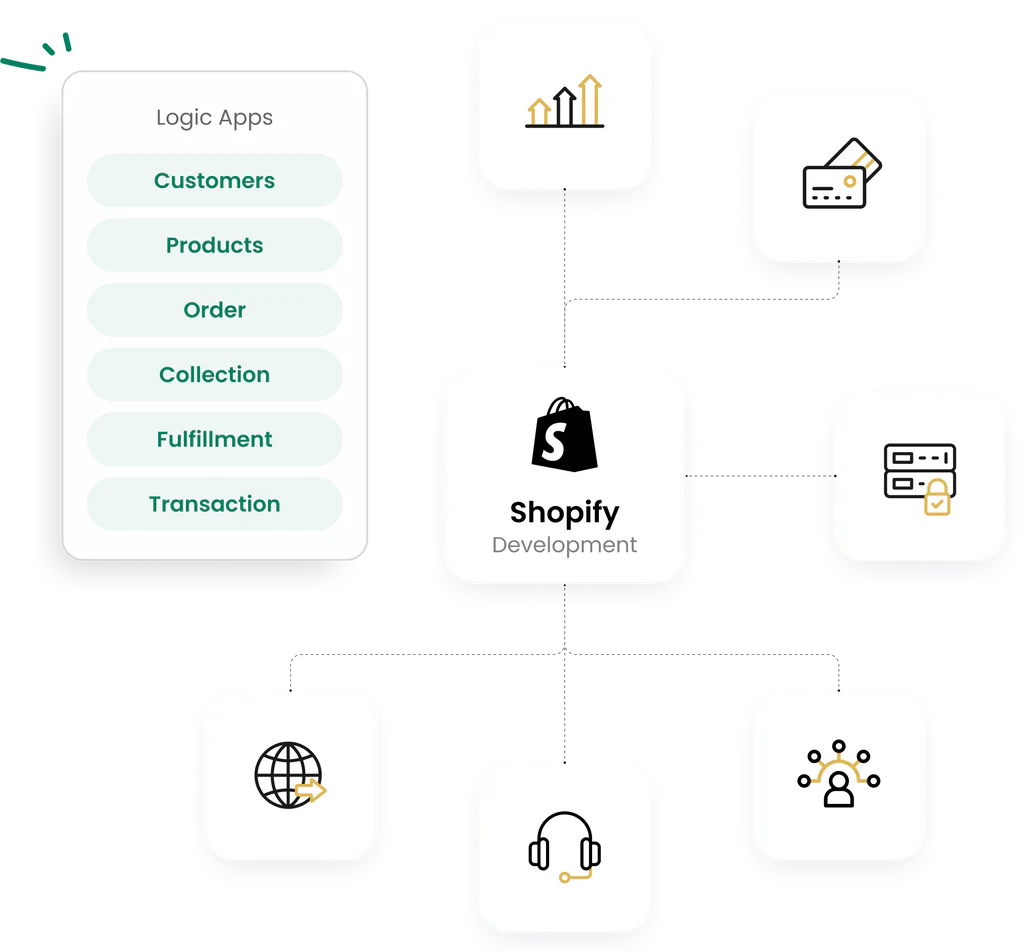
Every Shopify order automatically creates a corresponding record in your ERP. Order status, payment details, shipping information, and line items all flow across without manual entry.
Stock levels update in real time across your Shopify store and ERP as orders are placed, fulfilled, or returned. Multi-location and multi-warehouse inventory sync included.
Product records, pricing updates, variant details, and catalog changes sync between systems so your Shopify storefront always reflects what your ERP says is available and at what price.
New Shopify customers sync to your ERP as company or contact records. Purchase history, account details, and billing information stay consistent across both systems.
Invoices, payments, refunds, and tax records flow from Shopify into your ERP so your finance team always has accurate, up-to-date numbers without manual reconciliation.
Fulfillment updates, shipping confirmations, and tracking numbers flow back from your ERP or 3PL into Shopify so customers receive accurate order status without your team manually updating anything.

ERP Systems We Connect to Shopify

We integrate Shopify with the ERP systems running mid-market and enterprise commerce operations. If your ERP is not listed below, contact us. If it has an API, we can connect it.

Microsoft Dynamics 365

The natural choice for brands already in the Microsoft ecosystem. Finance, supply chain, and Shopify all connected in one environment.

SAP S/4HANA

Built for high-volume, multi-region operations. Handles complex procurement, global logistics, and compliance alongside your Shopify storefront.

Katana

Purpose-built for Shopify brands that manufacture products. Real-time production planning, raw material tracking, and shop floor visibility.

Odoo ERP

Modular and cost-effective. Start with inventory and accounting, then add CRM or manufacturing as your business grows.

SAP Business One

Mid-market ERP with solid financial controls, warehouse management, and purchasing workflows. Less complex than S/4HANA.

ERPNext

Open-source ERP covering accounting, inventory, HR, and project management. No licensing fees. Fully customizable by your dev team.

Oracle NetSuite ERP

The most widely deployed cloud ERP for Shopify Plus merchants. Financials, warehouse management, and CRM in one platform.

Acumatica Cloud ERP

Cloud-native ERP with unlimited-user licensing. Scales with your team without adding per-seat costs as you grow.

Sage Intacct

Finance-first ERP built for CFOs. Multi-entity consolidation, revenue recognition, and audit-ready reporting connected to Shopify.

Epicor

Built for manufacturers and distributors. Production management, quality control, and supply chain planning integrated with Shopify.

How We Build Your Shopify ERP Integration

Integration Strategy and Data Mapping

We audit your ERP data structure and your Shopify store setup to map exactly which data needs to flow, in which direction, and at what frequency. No assumptions. No generic templates.

Build and Configuration

We build the integration layer, whether that is a pre-built connector, iPaaS configuration, or custom API middleware. Every field is mapped, every edge case is accounted for, and every sync is tested against real data before going live.

Testing, Launch, and Ongoing Support

We run full QA across all data flows before your integration goes live. Post-launch, we monitor sync performance, handle errors, and iterate as your business and ERP requirements evolve.

Your Competitors Are Already Connected. Are You?

Advanced Integration Features We Configure

Data flows both ways between Shopify and your ERP, automatically. Orders created in Shopify appear in your ERP within seconds. Fulfillment updates in your ERP push back to Shopify immediately. No scheduled batch exports, no lag, no manual intervention.

We configure inventory sync across multiple Shopify locations and multiple ERP warehouse records. Each location stays accurate in real time so your fulfillment team always knows what is available and where.

Every ERP structures data differently from Shopify. We build custom field mappings that translate your ERP's data model into Shopify's requirements, including custom metafields, product variants, pricing tiers, and tax codes.

When a sync fails, your team knows about it immediately through automated alerts. We build error handling logic that logs failures, retries where appropriate, and notifies the right people so no order or inventory update falls through the cracks.

We connect your ERP to third-party logistics providers and warehouse management systems that sit between Shopify and your ERP, ensuring fulfillment data flows cleanly across all three systems.

For Shopify Plus B2B stores, we configure ERP sync that handles company accounts, buyer-specific pricing, net payment terms, purchase order data, and invoice generation as part of the integration layer.

What Changes When Your ERP and Shopify Are Properly Connected

Eliminate Manual Data Entry

Every order, inventory update, and customer record that previously required manual entry now moves automatically. Your team stops doing the work that software should be doing.

Inventory Accuracy Across Every Channel

Real-time sync means your Shopify store always reflects your actual available stock. No more overselling, no more stockouts caused by data that is hours behind.

Faster Fulfillment and Fewer Errors

Orders flow from Shopify into your ERP and out to fulfillment without anyone touching them manually. Errors caused by manual entry drop immediately. Fulfillment speeds up.

One Source of Truth for Your Business

Finance, operations, and your Shopify store all work from the same live data. Month-end reconciliation gets faster. Purchasing decisions get smarter. Reporting gets accurate.

Brands That Connected Their ERP to Shopify With Ecomm Wizards

Getting Started With Us For Your ERP for Shopify Integration Looks Like This

Ready to integrate?

You know your ERP and your Shopify store need to be connected. Book a free consultation and we will scope the right integration approach for your systems, data volume, and budget.

Not Sure Where to Start?

Tell us which ERP you are running, how many orders you process per week, and what data you need to sync. We will give you an honest recommendation, even if the answer is "not yet."

Frequently Asked Questions

We connect Shopify to NetSuite, Microsoft Dynamics 365, SAP Business One, SAP S/4HANA, Acumatica, Odoo, Sage 100, Sage 300, Sage X3, Katana, Epicor, and most other ERP systems with an available API. If your ERP is not on this list, contact us and we will assess compatibility.

Most Shopify ERP integrations take four to eight weeks from discovery to go-live, depending on the complexity of your data model, the number of data flows required, and whether we are using a pre-built connector or building custom middleware. We provide a clear timeline with every quote before work begins.

Shopify ERP integration cost depends on the ERP system, the number of data flows, integration complexity, and whether a pre-built connector or custom build is required. Simple integrations using existing connectors are faster and lower cost. Complex custom builds for enterprise ERP systems are scoped individually. We provide fixed-price quotes with no hourly billing surprises. Contact us for a detailed estimate.

We sync orders, inventory, products, customers, pricing, financials, fulfillment updates, and shipping data between Shopify and your ERP. For Shopify Plus B2B stores, we also sync company accounts, net payment terms, purchase orders, and invoice data. Custom field mapping is included for any non-standard data your ERP uses.
Bi-directional. Data flows both ways between Shopify and your ERP. Orders created in Shopify flow into your ERP. Fulfillment updates, inventory changes, and pricing updates in your ERP flow back into Shopify. The direction and frequency of each data flow is configured during the discovery and mapping phase.
No. We build and test the integration in a staging environment before it touches your live store. The go-live process is managed to ensure zero downtime and no disruption to your active orders, inventory, or customers.
We build error handling and alerting into every integration. When a sync fails, the error is logged, the relevant team is alerted, and the system retries where appropriate. You always have visibility into what is syncing and what is not, with a clear log of any exceptions.
Yes. Post-launch support, error monitoring, and ongoing development are all available. ERP integrations need to evolve as your business grows, your ERP is updated, or your Shopify setup changes. We are a long-term partner, not a one-time build team.

We’ll show you exactly where you're losing revenue and how to fix it.

Scroll to Top