
Platform and migration
We move you onto Shopify without losing the orders, the customers or the rankings
- Platform selection
- Shopify migration
- Order and customer data
- Redirect mapping
- Replatform planning

The design, the build, the marketing, the day-to-day running of it. You get the price and the start date in writing before anyone starts.
Jewelry, homeware, menswear, wholesale. Different catalogs, same job: build the store, then keep it selling.








Every store sells something it doesn't have yet. A restock running late, a drop that isn't cut, a container still at sea.
The website almost never knows. It says In stock right up until it says Sold out, and everything between those two words is a decision nobody made.
So tell us what you sell and where it comes from. It's the first thing any ecommerce agency Los Angeles shortlist should ask you.
In short
Ecomm Wizards is an ecommerce agency Los Angeles brands hire for design, build, marketing and support. We work on Shopify and Shopify Plus. We also build the part that decides what your store says on the days your stock is late.
Apparel cut downtown. Beauty filled in the valley. Jewelry, furniture, supplements, most of it landing from somewhere else first.
Whichever one you are, there's a gap between the day a thing is finished and the day it's yours to sell. Part of it is a factory. Part of it is a box on a dock a few miles from here. None of it is on your product page.
That gap isn't something you got wrong. Your supplier quotes production, your freight company quotes transit, and nobody quotes the part in between. It lands on you anyway, because you're the one with a page that has to say a date.

Saddleback
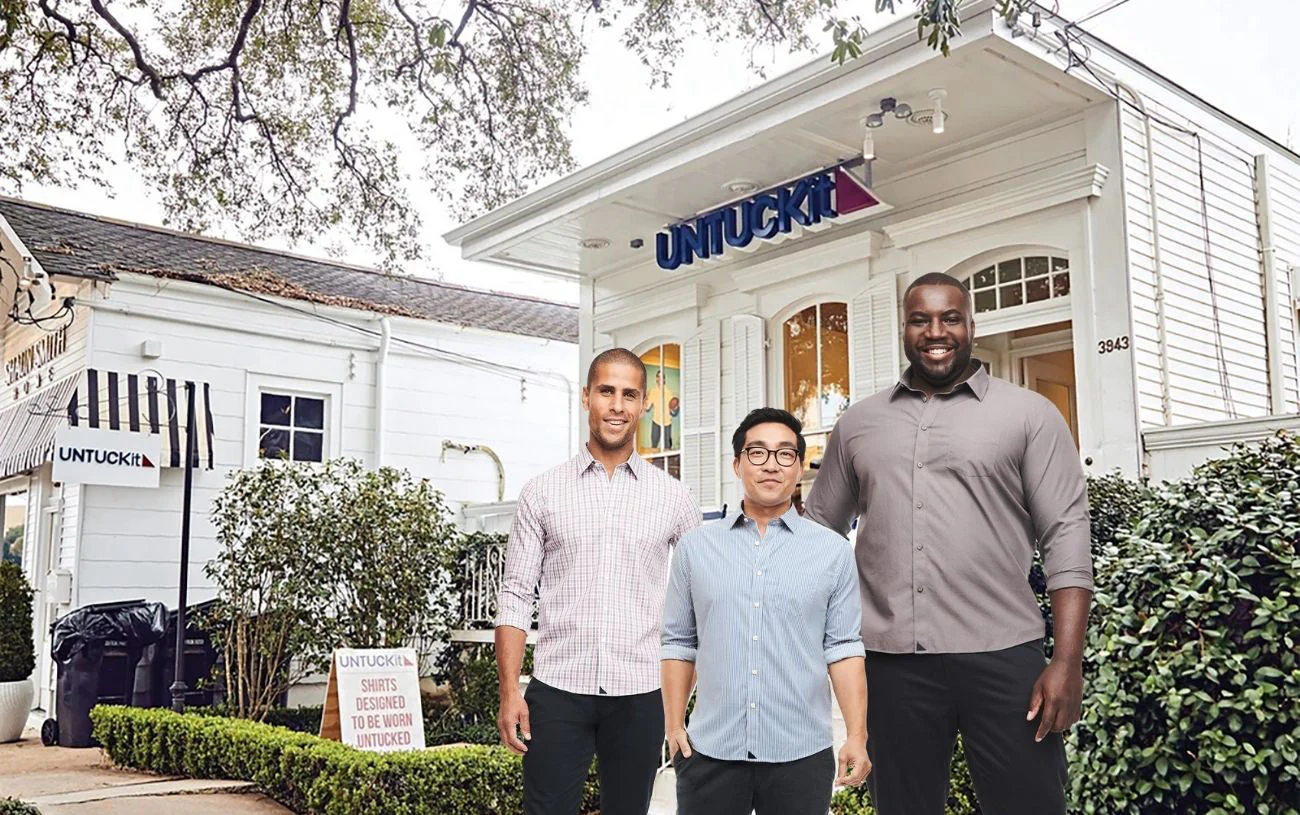
UntuckIt

Ronaldo Jewelry
The gap is widest when the goods cross an ocean, so that's the version worth the arithmetic. Everything upstream gets quoted as one number. Production takes this long, the crossing takes that long, so the stock lands then.
None of them is one number.
Carriers publish transits into this port from 13 days to 31. Same ocean, same destination. Which one you get was decided by the service your freight company booked, before anyone asked you.
Fewer than a third of sailings on this lane arrive when the carrier first said they would. That figure moved thirty points between two consecutive months this year.
And that's before the dock. A normal week on terminal runs under three days. The port publishes its own all-time peak in the same table, and it's nearly four times that.
So you're not planning against a lead time. You're planning against a spread, and it has to go somewhere. You hold more stock, which costs cash. Or you sell it as a promise, which costs a preorder window and a date you have to hit. Pick neither and you get the third thing: running out, and finding out when your customer does.
Which one to buy, and how much, is arithmetic on four numbers you already have. Put it in front of every ecommerce agency Los Angeles shortlist before anyone quotes you. The model is below.
What we do
Each is sold on its own, and each one below is anchored to a store we actually built. Take all of it or one piece.
Platform and migration
Design and UX
Ecommerce web design Los Angeles brands ask us for usually stops at the hero. We design the rest too: low stock, preorder, shipping late, back in stock.
Build and development
Ecommerce development Los Angeles brands buy is mostly the half you can see. We build the other half: inventory rules, alerts, fulfillment paths, integrations.
Running the store
E-commerce management Los Angeles brands hand us is the day-to-day: merchandising, email and SMS, reporting, and telling the customer before they ask.

Four numbers you already have, and the arithmetic that turns them into a preorder window and a safety stock figure. Run it on your own.
| What you're deciding | Low variance | Typical | High variance |
|---|---|---|---|
| Transit range you're assumingDoor to door, factory gate to the day your warehouse marks it received. Not the carrier's port-to-port number, which leaves out both moving legs. | 5 to 6 weeks | 5 to 8 weeks | 5 to 11 weeks |
| Late-arrival exposure this createsThe only number that matters, and it's just your worst arrival minus your average. Everything below is arithmetic on this one. | 1 week | 3 weeks | 6 weeks |
| Safety stock, in weeks of coverWeeks rather than units, so it reads the same at any size. Multiply by your own weekly rate for that variant. | 1 week | 2 weeks | 3 weeks |
| Preorder window to open | None needed | 1 week | 3 weeks |
| Ship date to promisePromise the bad case, not the average one. You can always ship early. Shipping late costs you the customer. | Your normal date | Your worst observed date | Worst observed, plus a week |
| When to switch the messagingAn alert on the variant, not a note in somebody's calendar. It has to fire while there's still time to change the page. | Under 1 week of cover | Under 2 weeks of cover | Under 3 weeks of cover |
Everything in the high-variance column is a decision somebody has to make before the stock runs out.
Your average is already in a quote somewhere. Your range is sitting in your last six arrivals, and almost nobody works it out. It takes ten minutes, and it changes what you order, what you promise and when you say something. Anyone on your ecommerce agency Los Angeles shortlist should tell you where you sit on this table before they quote you.
Average transit, door to door. Your last six arrivals, cargo-ready date to received date. Six is the minimum that shows a shape.
Your worst one. Same six, the latest of them. Not the quoted transit, which is an average with no range attached.
Reorder lead time. Your supplier's last three orders, deposit paid to cargo ready. Suppliers quote production and leave out sampling.
Weekly sales velocity. Sales by product variant, last eight to twelve weeks. Per variant, because stock is held per variant. Drop any week with a promotion.
It's one line. Your exposure is your worst arrival minus your average, and it gets absorbed either as stock or as a promise, split however you like.
So three weeks of exposure is three weeks of cover to find. Hold all three and you need no preorder window. Hold none and the window carries all three.
There's no option where the exposure costs nothing, and the brands that stock out are the ones that never picked.
Selling past zero is native. Turn on continue selling when out of stock and the order goes through. What it won't do is tell the customer anything, hold the order back, or change what the product page promises. That gap is where most preorder problems start.
A real preorder, with a stated ship date, its own badge and a separate fulfillment path, needs an app.
Splitting one order across two shipments is native. Fulfill part, the customer gets a notification, the rest stays open.
Charging on fulfillment needs the most care. It runs into your payment provider's authorization window, not anything in Shopify.
Ships by [date]. One date, padded to your worst case. Clearest and safest, because the point is that you beat it.
Ships in 4 to 6 weeks, and we'll email you the day it leaves. For when the range is genuinely wide. The follow-up promise stops it reading as evasive.
Arriving [month]. Order now to reserve one. Best where there's real scarcity. Don't use it where there isn't.
Avoid "ships soon" and "back in stock shortly." A vague phrase buys you nothing. You're inside the same thirty-day rule with no date to beat.
We're not in the city, and for this work it genuinely doesn't matter. What matters in an ecommerce agency Los Angeles engagement is who picks up, and what you keep when it ends.
The repository, the theme, the design files, anything we build. Yours on day one, not when the last invoice clears. Leave and you take it.
A shared Slack or Teams channel, not a ticket queue and not an account manager carrying your questions back and forth.
Cutovers and releases go out on Pacific hours rather than ours, so somebody on your side is awake when the switch flips.
One price and one date, agreed in advance. If the scope changes we requote it before we build it, not after you've paid.
Half of it is, and whoever runs your stock is probably good at their half. What they can't do is change what your product page says on the morning a delivery slips.
That's the gap. Two decisions, made by people who don't speak, and your customer only sees the second one. Ask your ops lead who tells the customer. Then ask whoever built your store the same question.
Then you're ahead of most, and the question is where the window came from.
Most we see were picked once, by feel, and never looked at again. Sized on your real arrival range, and rechecked when it moves, the same window does a different job.
We sell both, so it's a fair question to put to us.
Ecommerce consulting Los Angeles brands buy from us is the version where you have the hands and want the plan. It works when your developer has the time.
When the plan lands on somebody already at capacity, it sits. That second case is most of what we're hired for, and the test is whether your developer has a free month.
You can't know it, and no ecommerce agency Los Angeles shortlist can prove it in a paragraph on its own website. Us included.
So we made it cheap to find out. The first look costs nothing and you keep what it produces. Every figure in the model above cites a source with a date, and one of those notes is a caveat about our own numbers.
If you've been burned before, give somebody a small piece of work first.
Nothing gets quoted before it gets looked at. The first week is measurement: your real arrival range from your own last six, what it's costing you, and what it would take to close.
Then one number and one date, in writing.
The work itself is the build. Then the preorder path and what the product page says on it. The rules for split orders. The alert that fires while there's still time to act.
Builds run $5,000 to $50,000 depending on how much is custom. That's what an ecommerce agency Los Angeles quote should show you: one number, one date, and the scope behind both.
We build on Shopify and Shopify Plus, and most of what we're asked for is a move onto one of them. If you're on something else, we'd look at what it's costing you first. If you haven't picked yet, that's the easiest conversation we have.
A single date you've padded to your worst case, not a vague phrase. "Ships by" a date you'll beat works better than "ships soon" every time. There's a legal reason too: a US seller who takes an order without stating a shipping time is held to thirty days, after which your customer can cancel.
Upfront is simpler and it's what most brands should do. Charging later sounds friendlier, but it runs into your payment provider's authorization window. A card that fails weeks after the order is a lost sale. Charge upfront, promise conservatively, refund fast if you slip.
Shopify fulfills partially out of the box, so your mechanics are fine. The tickets come from surprise: if the product page implied one box and two turn up, people write in. Say at checkout that items may ship separately.
As far as the exposure your stock doesn't cover. Your worst arrival minus your average, less whatever you'll hold as stock, is your window.
No. Preorder, partial fulfillment and low-stock alerts all work on standard Shopify, usually with one app. Plus earns its money on checkout changes and API headroom, and you need neither for this.
Ours is $5,000 to $50,000 for a build, depending on how much of it is custom. You agree the number before we start. Ecommerce agency Los Angeles rates run above the national average, and ours don't change by city.
Most of our builds go live in about six weeks once scope is agreed. A migration carrying real order history runs eight to twelve, and the extra is your data rather than design.
No. We're a remote team working with brands across the US, and we'd rather tell you than let you find out. What we do have is the work above: your arrival range, and what to do about it.
Yes, though not on this page. This one's about the store and the stock behind it. If acquisition and retention are what you're after, that's our ecommerce marketing page.
Next step
You already know which order it was that went wrong.
Tell us about that one. We'll audit it and hand you the findings, not a summary:
It's a diagnosis, not the work. Fixing it is a separate quote you can decline.
The audit is free and the findings are yours to keep either way.
A senior developer replies within one working day. Not a salesperson.
