
Design and build
We build the buying part, not just the browsing part
- Storefront build
- Product data
- Checkout
- Delivery promises
- Returns flows

Apparel, wholesale, beauty, food and drink. Brands selling direct, through buyers, or both.








A visitor makes up their mind before they reach the cart. They want three things: what delivery costs, when it turns up, and how long they have to send it back.
So we went and checked. We opened 27 New England stores, on five different platforms, and read the product page the way a visitor does. One of them said when it would arrive.
Everything we found is below. Run the six checks on your own store before you sit through another agency pitch.
In short
Ecomm Wizards is an ecommerce agency Boston brands hire to build, move and grow an online store, direct to consumer and B2B. We work across platforms rather than one. Before a build goes live we check what a visitor can find out before they buy.
Plenty of Boston brands sell to people and to companies at the same time. A university, a hospital, an office buying gifts for staff. If you do, the same three answers decide both sales.
The difference is what happens when the answers are missing. Someone buying for their company will email and ask, because they cannot order without them. A shopper just leaves, and you never hear why.
Whoever builds your store should be building for both at once.
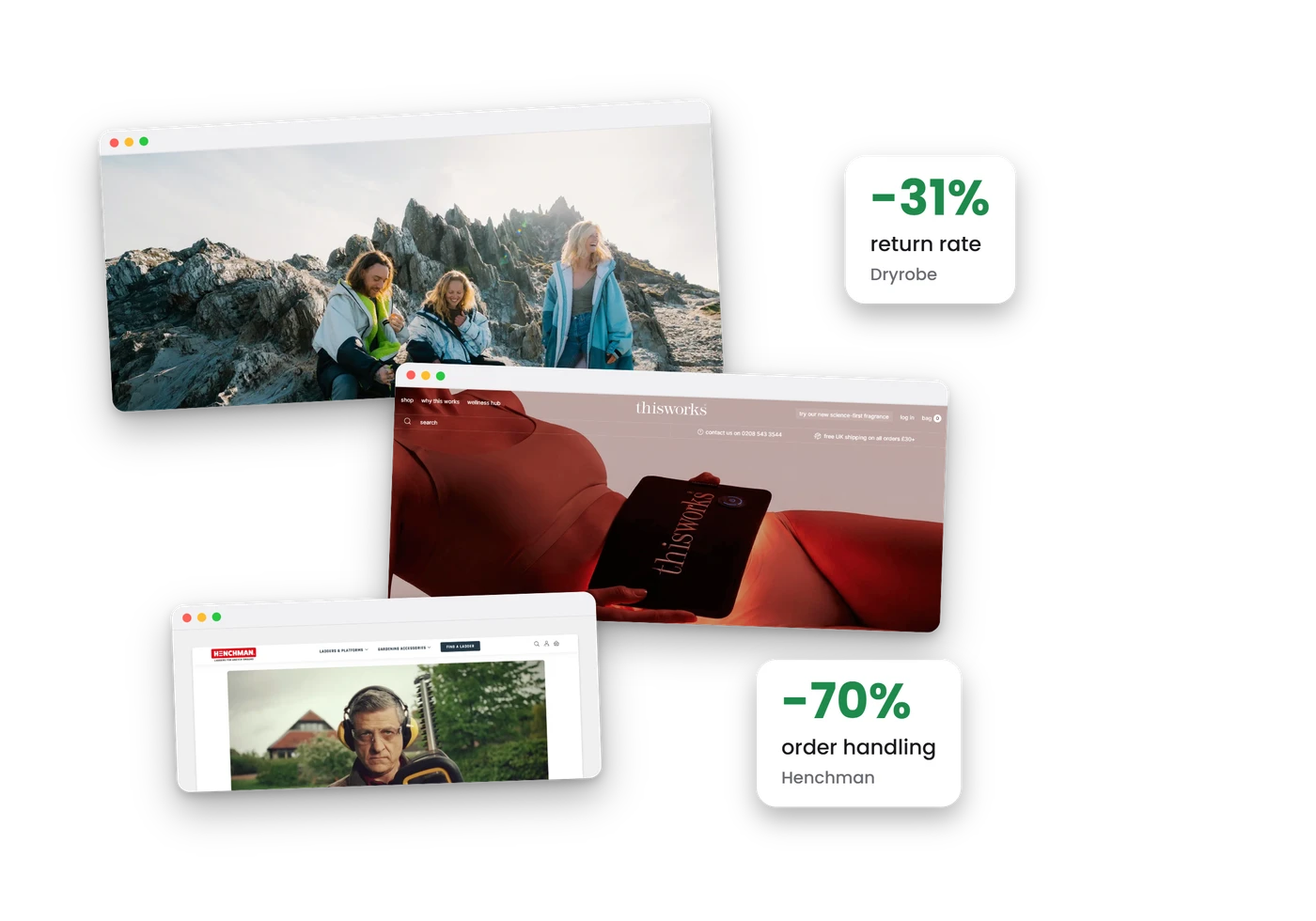
Dryrobe

Henchman

This Works
Wondering what your own store would score? Send us the link.
Get in touch with usDelivery cost, arrival date, returns window. Two of those three are not just good practice. They are required.
Your returns policy has to be in front of them before the sale completes. Massachusetts makes it an unfair and deceptive act to hide it. You have to disclose the exact nature and extent of your refund, return or cancellation policy, clearly, before the transaction completes. Not on request. Before.
And the total price has to come before you ask them for anything about themselves. A newer rule makes it unfair to ask for personal details, billing included, before you have shown the total price. The final amount they see has to include shipping. The price you advertise earlier does not.
Both rules follow the customer, not the seller. They reach any business selling into Massachusetts, wherever it sits. We are not lawyers and this is not legal advice; what applies to you is your counsel's call. For us it lands in the build. It belongs in the brief you hand an ecommerce agency Boston brands trust.
Six checks, each a minute on your own store. Run them before you brief an ecommerce agency Boston brands use. We ran them on 27 New England brands in September 2026, across five platforms. Brands are counted, not named.
| The check | What we found across 27 stores | What it means for you |
|---|---|---|
| Does it say what delivery costs? | 5 stated a figure. 12 mentioned shipping without one. 10 said nothing | 10 of them let a visitor reach the cart before learning what delivery costs |
| Does it say when it arrives?This was the worst result of the six by a distance, and the cheapest to put right. | 1 store in 27 gave a timeframe | They are deciding whether it arrives in time, and guessing |
| Does it say how long they have to send it back?The gap between 16 and 3 is the finding. Nearly everyone raises the subject; almost nobody closes it. | 3 stated a window. 16 mentioned returns without one. 8 said nothing | Talking about returns is not the same as answering the question |
| Were the return windows behind a click? | All three of them. Every stated window needed a tab opened first | A shopper in a hurry does not open tabs |
| Does the policy page agree with the product page? | Policy pages carried more than product pages every time | The answer exists. It is just not where they are standing |
| Is the total right before you ask who they are?Sell to buyers here and the total price has to be disclosed before you ask for personal or billing details. | Not measured. We stopped at the product page rather than enter 27 checkouts | The one of the six we could not run for you, and the one with a rule attached |
Nineteen of these twenty-seven stores talk about returns on the product page. Three say how long you have.
None of this is a platform problem. We found the same gap on Shopify, WooCommerce, BigCommerce, Salesforce and headless builds. None of these three answers is a platform feature.
The subject gets raised and the question never gets answered, so the buyer guesses at the moment of deciding.
Run the first three on your own best seller before you hand the job to an ecommerce agency Boston brands recommend.
The answers usually exist. They sit on a policy page, where nobody is standing.
Where a fact lives decides where it can appear. A returns window held as store data shows on the product page, in the cart and in the email. Typed into a policy page, it can only ever be there.
The cost lands twice. A visitor who cannot find it either leaves, or buys and asks your team.
Rather not run them yourself? Send us your store, name your best seller, and we'll run all six.
Get in touch with usWhat we do
Take one of these or all four. You can start anywhere, and each row links to the store it was done for.
Design and build
B2B and wholesale
Migration
Growth

Not sure which of the four you need? Tell us what's broken and we'll say which.
Get in touch with usFour things to expect from an ecommerce agency Boston brands keep, whether you buy one fix or the whole build.
The checks run on your current store, on whatever it is built on. If it does not need replacing, we will say so.
Delivery windows and returns terms go into your store data. From there they show on the page, in the cart and in the email, with nobody retyping them.
The repository, the theme and the app accounts are in your name. If you leave, there is nothing to ask us for.
If it has to change, you see the change and agree to it first.
Then we start where you are. The checks in the table ran on five different platforms and found the same thing on all of them, because none of it is a platform feature.
If moving is the right answer we will tell you, and if it is not, we will tell you that instead.
Then this is the cheapest moment to sort it. These three answers are the same work on every platform.
What matters is where they are stored, not whose logo is on the invoice. Decide that before the build and you pay once. A fair question for an ecommerce agency Boston brands hire.
It is the most common thing we hear about the last ecommerce agency Boston brands hired.
Scope is agreed in writing first. The work runs in phases you can stop at. Any change comes back to you before anyone carries on, so a slip shows up in week two rather than week ten.
An ecommerce agency Boston brands vouch for should show you this. Each number links to its case study, so you can check it.

We needed a store that could handle the complexity of the brand: serious athletes, casual fitness buyers, and trade accounts, all in one place. Ecomm Wizards built exactly that. The conversion numbers and the trade portal revenue both exceeded what we projected.


We had the brand and the product. We just didn't have a store. Ecomm Wizards built the whole subscription infrastructure from scratch and 80,000 subscribers in year one was beyond anything we had projected. The scent-swap portal changed our churn numbers entirely.

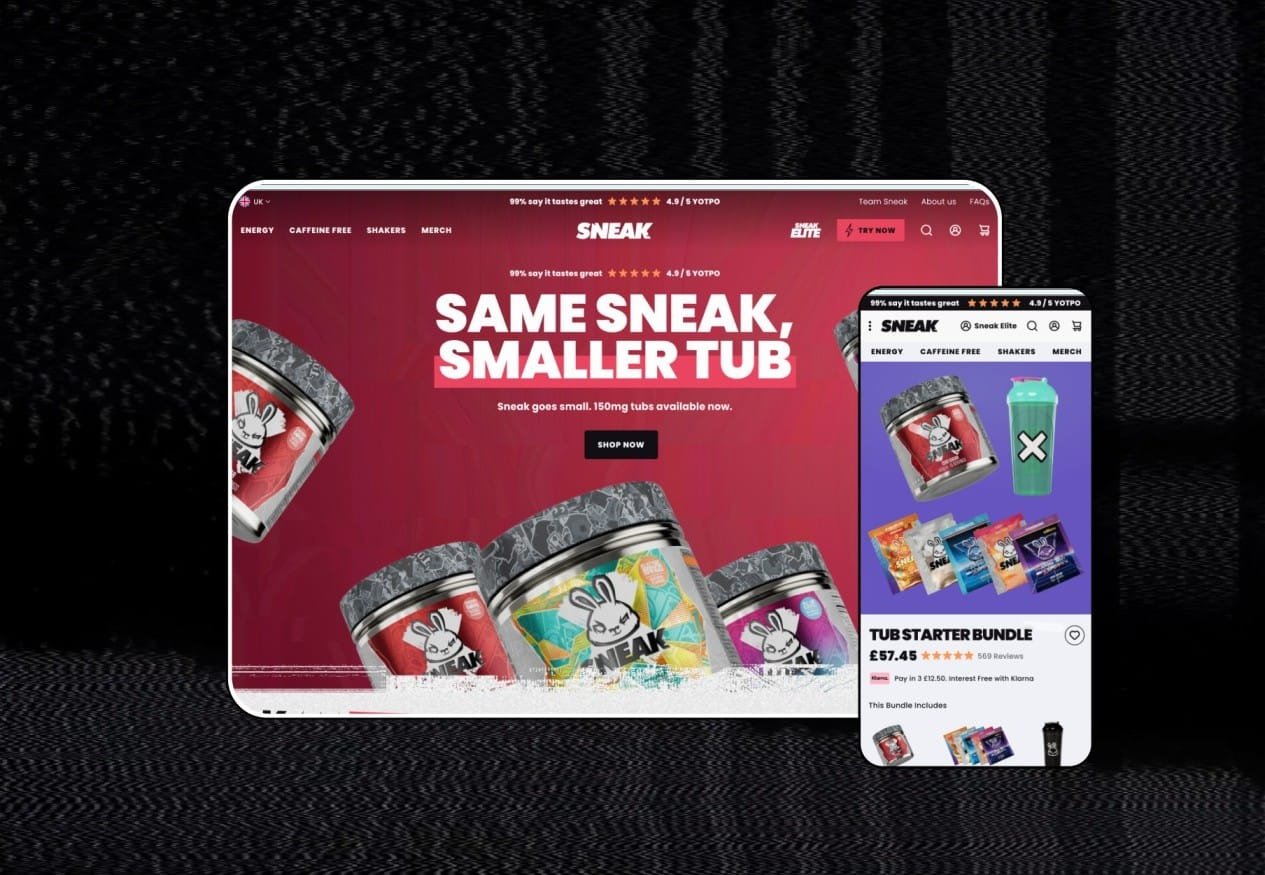
We are grateful to the team at Ecomm Wizards, who translated our vision into an outstanding design. Mobile performance in the first weeks post-launch spoke for itself.

It starts with the six checks, run on your homepage and your best seller. You get a list of what a buyer can find before they commit, and where they have to go looking.
Then you choose. Fix it on the store you have, or fold it into a rebuild, a migration or a B2B build. Either way the scope is agreed in writing first.
Whoever you hire, ask for that list before you agree to a redesign. It is a fair first question for an ecommerce agency Boston brands trust.
The first step is the list of what your visitor cannot find. It's free, and it's yours either way.
Get in touch with usNo. We build most often on Shopify, and we work with stores on other platforms too. The checks on this page were run across five of them. An ecommerce agency Boston brands hire should tell you what each platform would cost you in work, not which one it prefers. That is the answer you will get here.
Six to ten weeks for most stores once your scope is agreed. A migration carrying real order history runs longer, and the extra time goes on data rather than design.
Put what you can there. A flat rate or a free-shipping threshold can sit on the page; an exact cost often cannot until an address exists. Of the 27 stores we checked, 5 managed a figure and 1 gave an arrival window, so there is room to be the clearest store a buyer sees that day. Whoever builds your store should be able to tell you which of the two it can support.
Yes. Company accounts, price lists, order minimums, payment terms and reordering can run alongside your retail store, not as a second site. That is what a b2b ecommerce agency in Boston should set up for you. It is what we built for the wholesale brand above.
A written scope, a list of what your store fails today, who is doing the work, and what happens after launch. Ask for the list first. Any ecommerce agency Boston brands consider should open with it, and ours starts with the six checks.
Yes, and remotely is how it runs. Where your office sits does not change how the work is scoped, built or released.
We work for Boston brands, with no office in the city to visit. We would rather say so than let you find out later. You get our working hours, a named lead and a release process you can see.
Most brands keep us on for releases and fixes. If you would rather hand it to your own developer, the documentation goes with it.
Next step
The same six checks from the table, run on your store.
Put your store URL in the form, and name your best seller in the box underneath. We'll run the checks and hand you the findings:
It stops at the findings, and you can take the list to any developer.
No charge, and the findings are yours either way.
A developer replies within one working day. Not a salesperson.
