
Design and build
We design and build the storefront
- Storefront build
- Product pages
- Checkout
- Account area
- Design systems

Outdoor, furniture, parts, apparel, beauty, food. Ask any ecommerce agency Arizona brands shortlist which of those they have shipped. Then tell them yours.








Somebody is on your product page with their card out, and they are looking for one more reason to believe you. Not a discount. A reason to think the thing will last.
So we audited 120 product pages across 20 brands selling boots, jackets, sofas, boards and bedding, looking for one sentence: how long is this guaranteed for.
Ninety of the 120 did not say. Four brands in twenty said it on every single product, and one of them built a whole business on saying it. If you sell anything meant to outlive the season, that is the cheapest sentence an ecommerce agency Arizona brands hire could add to your store.
In short
Ecomm Wizards is an ecommerce agency Arizona brands hire for the whole store. We design it, build it, move it, speed it up and grow it. We work on the platform you run now. Anything you point us at is measured on the way in and again at the end.
Arizona sells gear for heat, distance and dust. Outdoor kit, parts for vehicles that cover real mileage, furniture for houses that run their air conditioning eight months a year.
None of that is bought on impulse. It is bought by somebody working out whether it will still be good in three years, because out here things get tested harder than your catalog photograph suggests.
Which puts an unusual weight on one sentence. An ecommerce agency Arizona founders brief is usually handed a store full of products that will last for years and a product page that never mentions it.
Ronaldo Jewelry

Candy Kittens

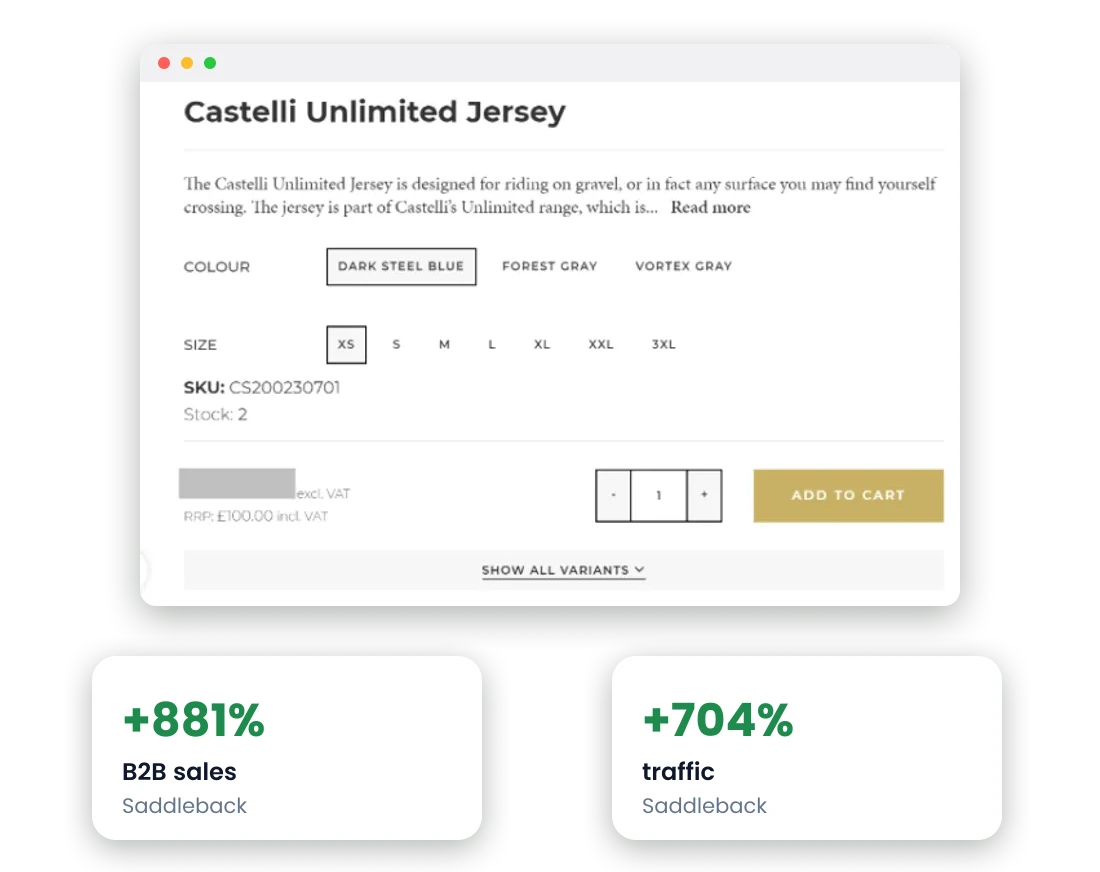
Saddleback
There is a federal rule about this. Where a product carries a written warranty, a catalog or mail order seller has to disclose the warranty text or a link to it. The rule says that has to sit in close conjunction with the product description.
Close conjunction is defined. The rule spells it out as the page carrying the description of the product, or the page facing it. Online, that is the product page itself.
So the question is not whether it belongs there. It is whether anybody put it there, and any ecommerce agency Arizona brands trust can tell you in an afternoon which of your products do and do not.
Everybody selling something durable says it is well made. We wanted to know how many put a number on it where the buyer is standing. So we audited six product pages on each of twenty brands. No firm is named below.
| What we counted | Across 120 product pages |
|---|---|
| Pages auditedSix each, across 20 brands. | 120 |
| Pages stating no guarantee length | 90 of 120 |
| Brands stating one on every page | 4 of 20 |
| Brands stating it on none | 11 of 20 |
| Hidden behind a collapsed tab insteadWe forced them open on four brands to check. | 0 |
| Extra text revealed by opening those tabsOn one brand, and still no guarantee in it. | 3,895 characters |
| Rival questions tested and rejectedCare, contents and assembly all came back nearly flat. | 3 |
Three quarters is the number, but the four brands at the other end are the interesting part.
Four of the twenty say it on every product, and the strongest of them has built its entire reputation on a guarantee it repeats everywhere. It is not a coincidence that the brands willing to put a number on it are the ones people quote at each other.
The rest are not hiding anything. Most of them have a perfectly good warranty sitting on a policy page, written once, linked from the footer. It is simply nowhere near the moment somebody is deciding.
And the moment is the whole point. A guarantee read before the card comes out does one job. The same words found afterwards are just customer service.
Finding out which of your products say it takes an afternoon, and any ecommerce agency Arizona brands shortlist should be able to tell you before quoting for anything bigger.
Because it is written once, by somebody else. The warranty gets drafted for legal reasons and lives at a URL. Nobody checks whether a buyer ever sees it.
And the product page is crowded. Everything competes for that space, and a sentence about year three loses to a photograph every time it is argued about.
So it needs a decision, not a rewrite. You already have the warranty. Putting it where the choice happens is an afternoon, and an ecommerce agency Arizona companies retain should be doing it before anything more expensive.
Want that audit on your own catalog? Send the store address and you will have it this week.
Get in touch with usWhat we do
Each row below links the build it came from. Brands usually come for one of these and leave having bought two. All seven together cover what an ecommerce agency Arizona teams retain gets asked for.
Design and build
Ecommerce development
An ecommerce development agency in Arizona should be able to say where a custom feature will live and what it costs to keep, before any of it is written.

Migration

Conversion
Retention

Speed and performance

Wholesale and B2B
The build is the same job everywhere. What changes is the question your buyer cannot get answered. An ecommerce agency Arizona brands hire should know which one that is in your category.
Specs he can compare line by line. Spares kept in stock. Your guarantee stated where he is standing.
What breaks first: Longevity. He is paying more for a thing that lasts. The page never says how long.
Sizes and materials on the page. Delivery that says who carries it inside. Parts your customer can still order in year three.
What breaks first: Permanence. A sofa is a ten-year choice made from six photos. Nobody says what happens in year four.
Fitment your buyer can trust. A list of what it replaces. A trade door for the shops that fit these for a living.
What breaks first: Certainty. The wrong part costs him a week. So an unanswered question sends him to the maker instead.
Fit advice drawn from your own returns. Repair where the product earns it. Exchanges that keep the sale.
What breaks first: Durability. High up the price list, he is choosing you against a brand that promises to mend it forever.
Ingredients and routines that go past one product. Honest timings. A second order easier than your customer's first.
What breaks first: Proof. He has been let down before. A vague claim reads as the thing he already gave up on.
Photos your buyer can zoom into. Metal and stone stated exactly. Aftercare that outlives the gift being opened.
What breaks first: Doubt about what it actually is. Metal, stone and weight settle this, and no photograph can.
Not sure which of the seven you need? Tell us about the store and we will name the one we would start on.
Get in touch with usFour of them, whichever of the seven you buy. Worth asking every ecommerce agency Arizona brands weigh up for the same.
We shop your store ourselves, on a phone first and then a desktop, reporting back whatever got in the way. That happens before any proposal exists.
Anything you ask us to shift is measured on the way in and on the way out. Both figures land with you, not a paragraph describing them.
The storefront, the code, the logins and the customer file are all in your name the whole way through. Walk away whenever you like and none of it goes with us.
Nothing starts until you have signed off what the job is. If it has to grow, you hear what that adds before the work happens.
In most cases that meets the rule. It still loses you the sale.
Somebody deciding between you and a cheaper option is doing it on the product page, with eleven tabs open. A promise he has to go hunting for is a promise he never weighs, and an ecommerce agency Arizona brands meet should say so early.
That is the real fear and it is worth saying out loud.
In practice the brands that state it loudest are not drowning in claims, they are charging more. You are not creating the obligation by writing it down. You already have it.
Almost nobody needs all seven, and we will tell you which two matter.
The list exists so you are not handed off to somebody else halfway through. Buying one of them is the normal way this starts with any ecommerce agency Arizona founders shortlist.
That is fine. The platform is rarely where the problem sits, and we take on whatever you run now.
Should a move genuinely help, we will show you the part of the business it changes. Should it not, that is what you hear.
We run the same audit over your catalog and tell you which products state a guarantee and which stay silent. One afternoon, no charge.
Then you get the rest of it. What your product pages answer, what they leave to a policy page, and which of the seven things above would move a number for you.
Usually two of the seven matter and five do not, and we will say which. An ecommerce agency Arizona brands keep ought to argue you out of the other five.
The first conversation is about your store and nothing else. There is no charge, and that holds when the answer is that we would change very little.
Get in touch with usIf your product has one, yes. A federal rule already expects the text or a link near the product description. A buyer choosing between two options weighs it there or not at all.
An ecommerce agency Arizona brands retain does six things. Builds the store. Writes what a theme cannot. Moves you between platforms. Improves what converts. Keeps customers coming back. Opens a trade channel if you need one.
Answer the questions that cause hesitation before the order, not after. Fit, materials, size and how long it lasts cause most of it. Any ecommerce agency Arizona brands weigh up can say which of the four you are missing.
Yes, and both are listed above as their own services. Buy them separately or together. We would start with whichever your own numbers say is weakest.
A focused piece of conversion work is weeks. A full storefront build runs a few months, and the part that stretches is your decisions rather than the code.
Yes. We do not open with the platform. We open with whichever part of your store is losing orders today.
Yes, and it is how every job here runs. There are no offices of ours in Arizona, and your build does not change according to where it is written.
No. The seven services scale down as well as up. One piece of work on a single product template of yours is a normal way to start.
Then the trade side is the build and the consumer storefront is secondary. That reverses the usual order of work, and you will be told so rather than sold both.
Yes, and most brands do. Putting a guarantee on your product templates is about as small as this gets, and it is a reasonable way to see how we work.
Next step
The same audit from the table, run across your catalog instead.
Put your store address in the form, and you get back:
You get the findings and nothing else attached to them.
Free, and nobody chases you afterwards.
A developer replies within one working day. Not a salesperson.
