
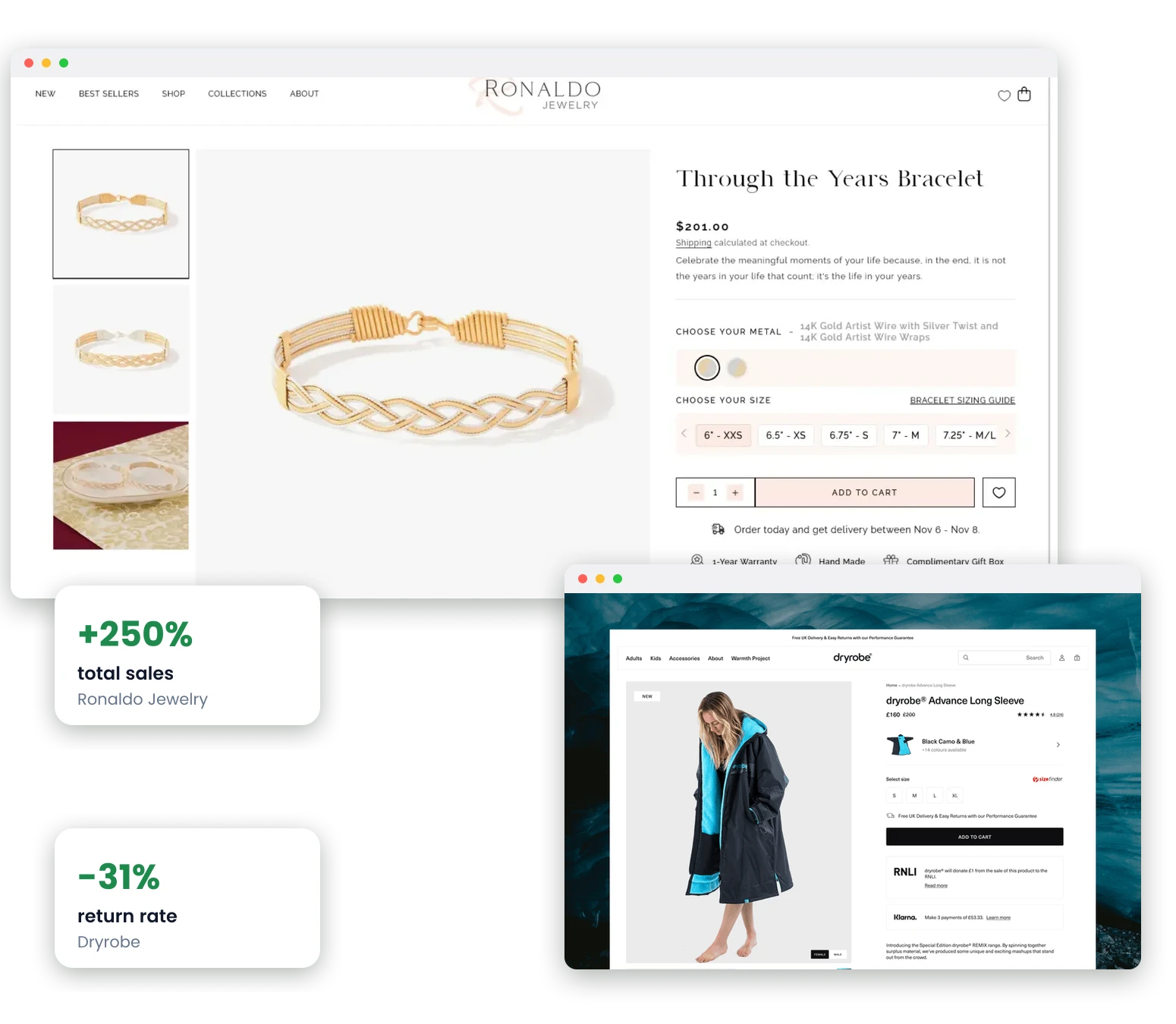
Design and build
We build the page that has to sell it without you there
- Storefront build
- Product pages
- Product data
- Checkout
- Design systems

Ten products or ten thousand, on the platform you are on now or the one you move to.








A shelf only ever needed one photograph. The pack did the rest of the work, because the customer was standing in front of it and could pick it up.
A product page has to do all of that with pictures. So we counted them. Across 26 stores and 10,301 products, the typical product had five or six.
The interesting number was the gap. In the middle store, the best product had 17 photographs and the bottom tenth had two. In the widest case we found, 56 against one. It is the first thing an ecommerce agency Minneapolis brands hire should count on yours.
In short
Ecomm Wizards is an ecommerce agency Minneapolis brands hire to design, build, move and grow online stores. We work on the platform you are on today. We start by finding what is actually losing you orders.
A lot of the good ones started on somebody else's shelf. The buyer saw a line sheet, the shopper saw the box, and the job of the photograph was to make the packaging look right under strip lights.
Then the store arrived, usually built quickly and usually by whoever was available. The photography moved across unchanged, because nobody had a reason to think it was the wrong photography.
It is a good problem to have. It means the product already sells. But an ecommerce agency Minneapolis brands hire should be able to tell you which part of that inheritance is still working online and which part is quietly costing you.
Ronaldo Jewelry

Dryrobe
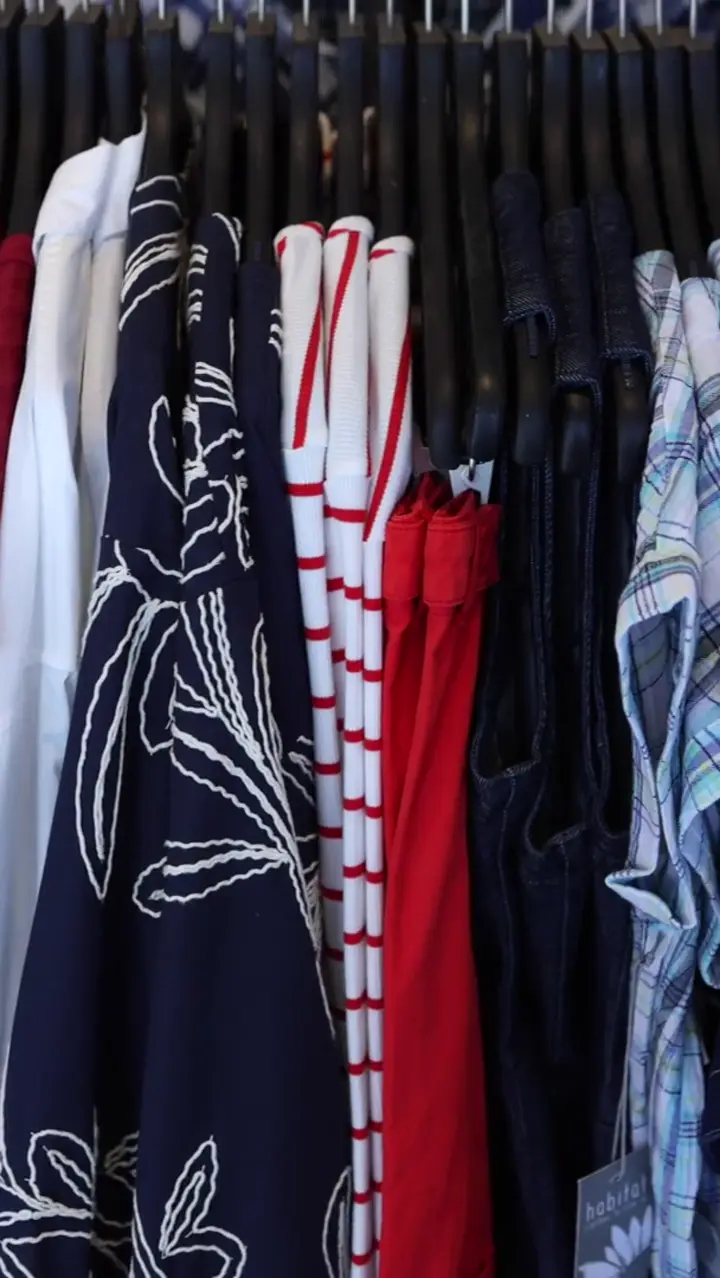
Evie Lou
A product with no picture does not qualify. Google's own rules for product results make the image required, not optional. A product without one cannot show up as a product, whatever else is right about it.
And one is the floor, not the target. Google asks for several photographs, at three different shapes, so its results can use whichever fits. A single square pack shot meets the minimum and nothing more.
So the products at the bottom of your catalog are not just harder to buy. They are harder to find at all, which is what an ecommerce agency Minneapolis brands trust should check first.
Nobody ranking for this work publishes a measurement of anything, so here is ours. We read 26 store catalogs and counted the photographs on every product, then looked at how far the count falls between the best product and the rest. Any ecommerce agency Minneapolis brands trust should be able to do the same for one store.
| What we counted | Across the 26 stores |
|---|---|
| Products we read | 10,301 |
| Photographs on a typical product | 5 or 6 |
| On the store's best productUsually the one the campaign was built around. | 17 |
| On the bottom tenth of the same store | 2 or 3 |
| Widest gap we found inside one store | 56 against 1 |
| Products with fewer than threeBelow the number Google recommends. | 1,322 of 10,301 |
| Products with no photograph at allThese cannot appear as a product result at all. | 30 |
| Stores whose bottom tenth gets two or fewer | 13 of 26 |
The average is not the story. Five or six photographs is a perfectly reasonable product page, and if that were true across a catalog nobody would need to read this.
The gap is the story. The same store that gives its hero product 17 pictures gives the bottom of its catalog two, and there is far more of that than there is hero product. Nobody decided that. It is what happens when photography is commissioned campaign by campaign and the rest gets whatever the supplier sent.
Half the stores we read are in that position. Finding out whether you are is an afternoon, and it is a fair thing to ask any ecommerce agency Minneapolis brands shortlist to do before it proposes anything.
The top of it already works. Your best sellers get the photography, the copy and the attention, and they convert accordingly. There is not much left to win there.
The rest is where the search traffic lands. Someone looking for a specific thing arrives on the page for that specific thing, and that page is usually not your hero product.
And pictures are what get returned. A customer who cannot see it properly guesses, and some of those guesses come back. That is the part an ecommerce agency Minneapolis brands keep should be able to put a number against.
Curious what your own bottom hundred looks like? Send us the store and we will count it.
Get in touch with usWhat we do
Take one or take all four. Every row links to the store it was done for, and none of it assumes you are starting again. It is the range an ecommerce agency Minneapolis brands hire should cover.
Design and build
Ecommerce development
Migration

Growth
Not sure which of these you want? Tell us about the store and we will point.
Get in touch with usFour things that hold whatever you buy. Hold every ecommerce agency Minneapolis brands talk to against the same four.
The checks run on your current store, on whatever it is built on. If it does not need replacing, we will say so and tell you what does.
We count what we are asked to fix, and count it again when we are done. You see both, not a description of both.
The code, the accounts and the assets are in your name. If you leave there is nothing to ask us for.
Changes come to you before they happen, not after.
At the top of your catalog it almost certainly is. That was true of every store we read.
The question is what the four hundredth product got. In half the stores we counted, the answer was two pictures or fewer, which is what any ecommerce agency Minneapolis brands shortlist should check first.
That is fine, and it is not the first question we would ask. The count above runs the same way whatever a store is built on, because it reads your catalog rather than the platform.
If moving would help we will say so, and if it would not we will say that too.
Nor should it, and we would not propose it. We do not take photographs.
What an ecommerce agency Minneapolis brands hire builds is everything around them. The list of which products actually need a shoot. The rule that stops a new one going live without enough. And pages that use what you already have properly, which is usually where half the win turns out to be.
Fair, and there are good people here to choose from. Someone in the room is worth having.
Just ask both of us the same thing first. Ask how many photographs the bottom of your catalog carries, and see who comes back with a number rather than an opinion.
With the same count, run on your catalog. It sorts every product by how much there is to look at and shows you the bottom of the list.
Most of the time that list is shorter than people fear and duller than they expect. A few hundred products that were added in a hurry and never went back.
Then you get the two versions. Fixing the worst of it, which is quick, or changing how a product gets added so it stops happening, which is not. Any ecommerce agency Minneapolis brands hire should show you both and let you pick.
The first conversation is about what is actually losing you orders. It costs you nothing, including when the answer is that we would change very little.
Get in touch with usGoogle recommends several, at three different shapes, so its results can use whichever fits. As a floor, anything of yours with fewer than three is below that. In our count, 1,322 of 10,301 products were.
Yes. Google's rules for product results make the image required, not optional. A product of yours without one cannot appear as a product at all. Thirty in our count had none.
They can. A customer who cannot see something properly guesses, and some guesses come back. It is one of the few things you can change that moves returns and conversion in the same direction.
Enough to answer what somebody would pick it up to check. Scale, texture, what the back looks like, and the color they are actually choosing. For most products that is five or six, and any ecommerce agency Minneapolis brands recommend should tell you where yours falls short.
Yes. We work on whatever your store runs on now, and the first job is finding out whether the platform is the problem or something sitting on top of it. Often it is not the platform.
Four things, usually. Design how your store looks and how people move through it. Build what a theme cannot cover. Move the store when it stops fitting. And keep testing what makes people buy.
Yes. Everything runs remotely, and there is no office in the city to call at. None of your work changes shape because of where either of us sits.
Usually, and it is often the fastest way through. We can hand your team a scope to build, or pick up only the parts they have no time for. Nobody doing a decent job gets quietly pushed out.
Rarely. Most of what we find is fixable without touching the rest of the site. We will say when a rebuild really is the answer, and it is less often than you think.
Counting yours is an afternoon. Fixing the worst of the list is weeks. Changing how a product gets added so the list stops growing back is longer, and it is the only version that lasts.
Next step
The same count we ran on 10,301 products, run on yours.
Give us the store address and you get back:
It stops at the findings, and you can hand them to anyone.
No charge, and no follow-up sequence.
A developer replies within one working day. Not a salesperson.
